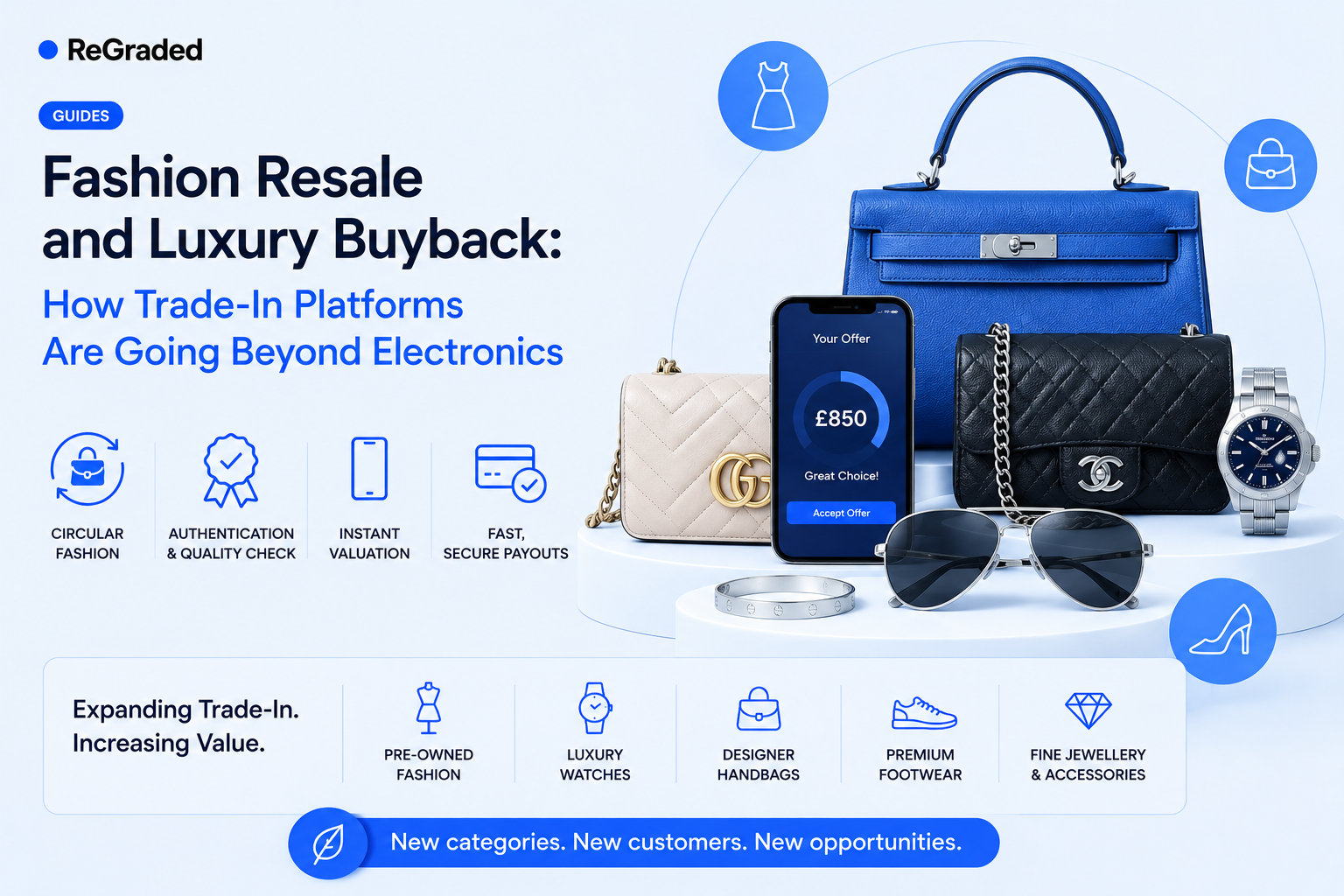
The fashion resale market is one of the fastest-growing segments of retail. Vestiaire Collective, The RealReal, and ThredUp built billion-pound businesses on second-hand fashion. Mainstream brands followed: Patagonia's Worn Wear, Selfridges' Reselfridges, Eileen Fisher's Renew. The pattern is clear — brand-operated buyback programmes are mainstream, and they're moving down-market from luxury into general fashion. The technology gap, until recently, was real. It isn't any more.
What's striking once you look closely is how similar the underlying workflow is to electronics trade-in. The catalogue is different. The grading is different. Everything else is essentially the same.
The workflow parity is the point
Strip a trade-in platform back to its core and the steps are: customer gets a quote, customer sends item, item is received, item is inspected and graded, payment is issued. Around that core sits the operations layer: customer accounts, transactional emails, shipping integration, audit trail, payment processing. None of that cares whether the item is an iPhone 15 or a Louis Vuitton Neverfull.
That's the structural insight. Fashion-resale operators trying to build bespoke platforms are rebuilding the same workflow electronics trade-in already solved — they're just shipping a different catalogue through it. The right platforms recognise this and treat the catalogue as configuration, not code.
What fashion and luxury operators need
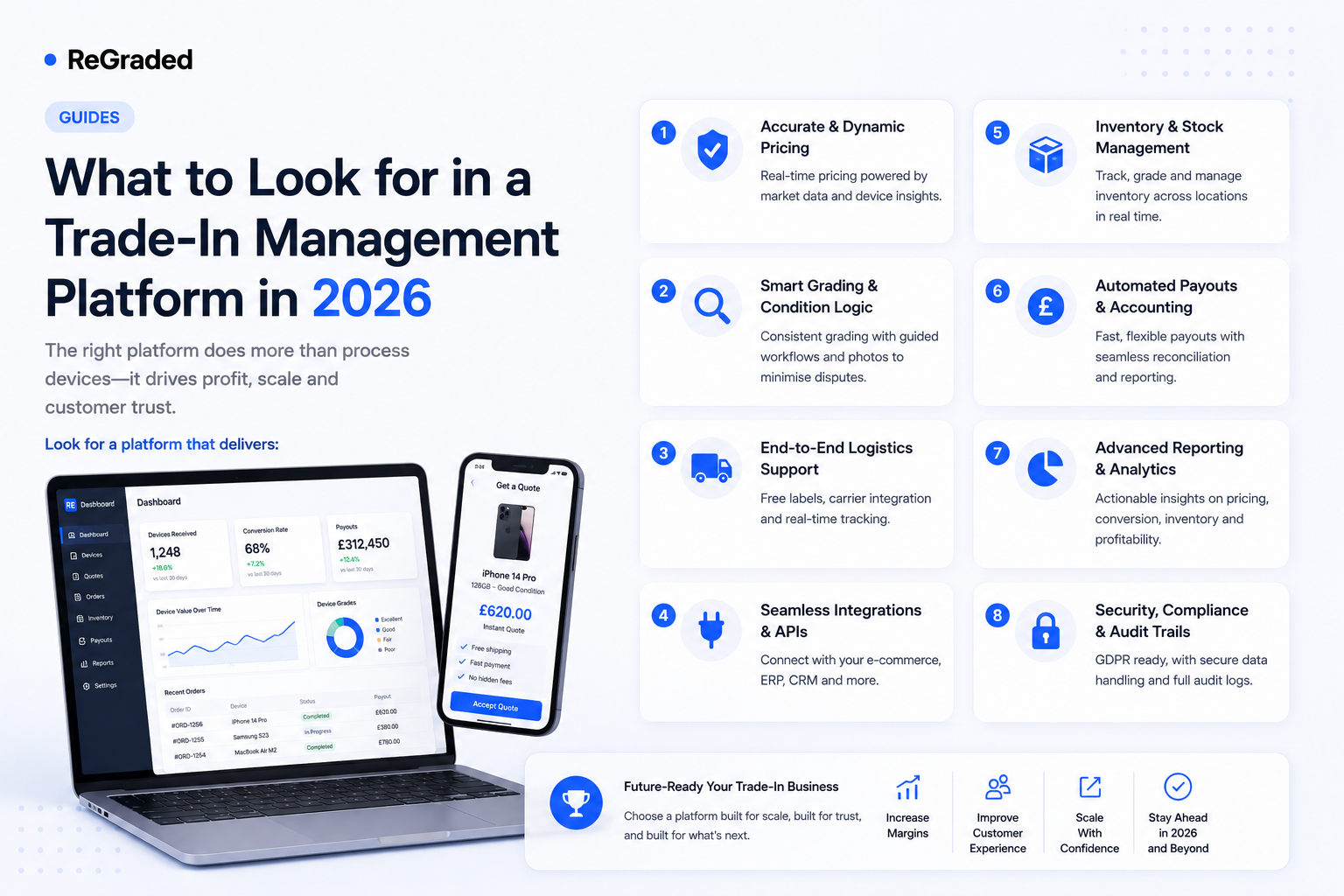
The requirements are recognisable but with their own emphases:
A branded customer-facing site. Brand presentation matters even more in fashion than in electronics. The buyback page has to feel like the brand, not like a generic resale form.
Condition-based pricing. Mint / excellent / good / fair / vintage — same logic as electronics, different vocabulary.
An authentication step. For luxury, this is the central operational concern: serial numbers, hardware stamps, leather grain, stitching, hardware patina. Built into the testing/grading workflow.
Photo evidence. Possibly more important than in electronics — every condition claim has to be visually defensible.
Customer communication throughout. Fashion customers expect a high-touch, branded experience at every step.
Fast, professional payment. Luxury customers don't tolerate the "5–10 working days" timeline that electronics customers grudgingly accept.
The operational core a trade-in platform provides covers every one of these without modification. The catalogue and grading templates change; the underlying machinery doesn't.
Why generic marketplaces don't fit
The default solution most fashion brands fall into is "list on eBay, Depop, or Vinted". This works for individual sellers but fails for brand-operated buyback because the marketplaces are peer-to-peer — they're built for many sellers to many buyers, not for one brand to control the buyback experience. The brand loses control over:
Pricing. The marketplace sets the rules; the brand can only suggest.
Customer experience. Buyers see the marketplace's UI, not the brand's.
Quality control. The marketplace's authentication is hit-or-miss; the brand wants its own standards.
Data. The marketplace owns the customer relationship; the brand gets a thin slice.
Margins. Marketplace fees are typically 10–20%, often more.
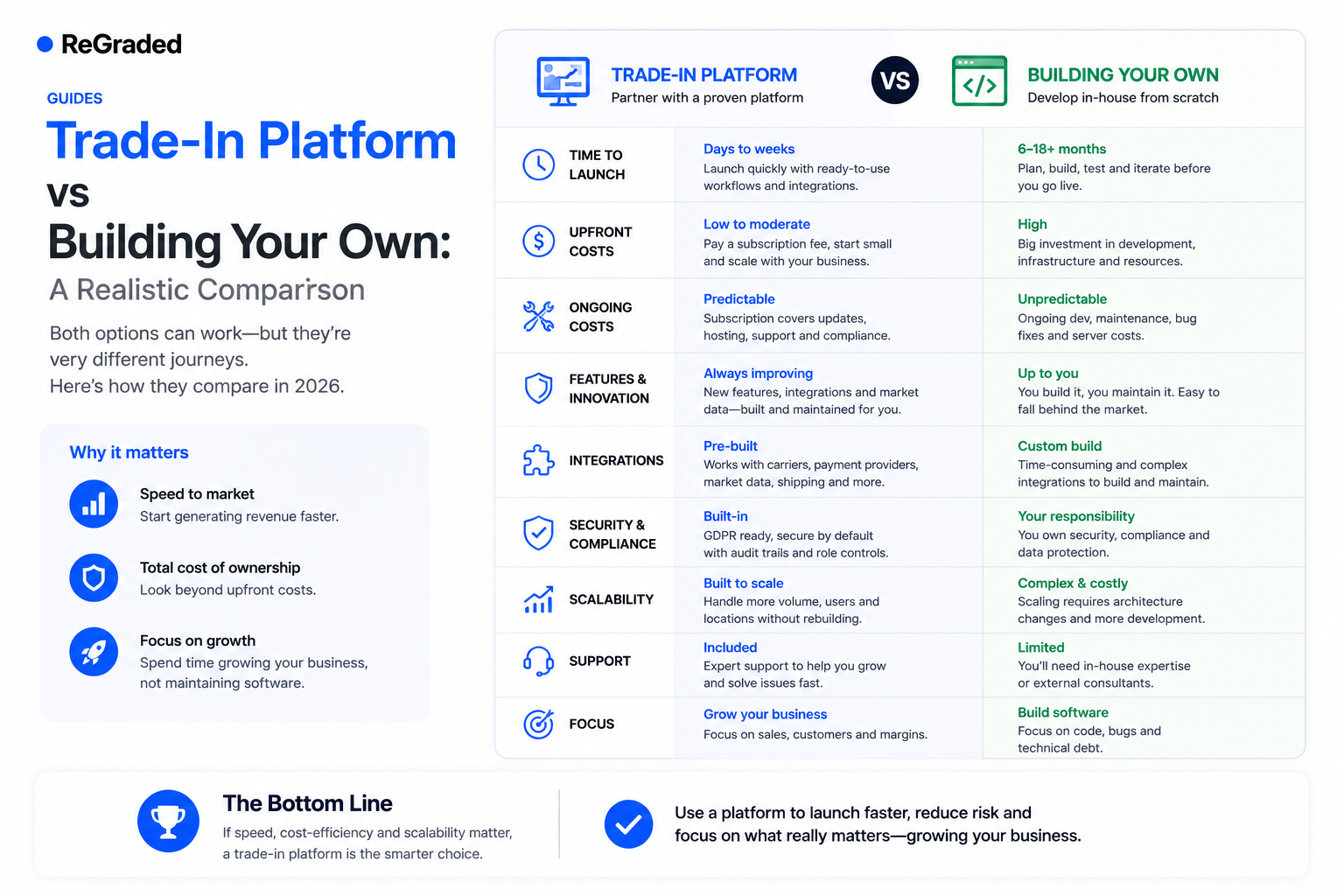
Brand-operated buyback solves all of this — but only if the technology supports it without a five-figure development project. Which is exactly what platform-based trade-in software does.
The platform-agnostic design
The key technical concept is that a modern trade-in platform's catalogue is fully configurable. There's nothing in the database that says "this is an iPhone". There's a catalogue with items, each item has variants (size, colour, condition), each variant has a price, and the platform is happy to ship that catalogue through its pipeline regardless of what the items actually are. "iPhone 15 Pro 256GB Black, Good Condition" and "Louis Vuitton Neverfull MM Monogram, Excellent Condition" are technically the same shape — both are catalogue items with conditions and prices.
This is what makes the same platform appropriate for both markets. ReGraded's catalogue, like most well-designed trade-in platforms, is item-agnostic by deliberate choice. Configurable catalogues and dynamic device pages are exactly the substrate that makes this work — your buyback page for "Neverfull MM Monogram" generates the same way a phone shop's "iPhone 15 Pro" page would, just with different content.
Authentication as a grading step
The biggest functional difference between fashion-luxury buyback and electronics is authentication. Luxury items demand expert verification — not just condition grading but provenance, materials, hardware, and historical-detail checks. The good news is that the same workflow that supports configurable testing checklists for electronics supports authentication checklists for luxury. The inspector follows a structured protocol, captures evidence photos, and records pass/fail/uncertain against each criterion.
Authentication operationally looks like grading-plus-evidence. The platform supports both equally well, because both are structured inspection workflows with photo capture and audit trail. The brand brings the expertise and the criteria; the platform provides the discipline.
The customer relationship
Fashion-luxury customers are typically higher-value, more brand-loyal, and more sensitive to experience quality than electronics trade-in customers. The platform's customer-facing layer — branded customer accounts, transactional emails, real-time status visibility — is exactly the kind of high-touch experience these customers expect. Done well, the buyback experience becomes a brand asset; done badly, it's a Trustpilot disaster.
What this means commercially
The technology that powers electronics trade-in is now the lowest-friction route to launching a fashion or luxury buyback programme. You skip the bespoke development project, the six-month timeline, and the five-figure invoice. You configure a catalogue, set a grading rubric, brand the customer experience, and launch. The brands moving fast here will own the secondary-market relationship with their own customers — which is exactly the relationship resale marketplaces have been quietly capturing for the last decade.
If you'd like to see how the platform handles non-electronics catalogues, we'll walk through a configured fashion or luxury setup live. The fashion and luxury use case covers this in more depth, and the team behind the platform have worked across both markets. Same platform, any product, your brand.