Comparison sites are the single biggest underused acquisition channel in trade-in. CompareMyMobile, Compare and Recycle, SellCell and a handful of others sit at the top of Google for almost every "sell my iPhone" search, and they collectively drive millions of high-intent visitors a year. If your prices are competitive and you're not on those listings, you're not really competing.
The reason most operators avoid them isn't strategic — it's operational. Maintaining listings by hand is genuinely awful work. Done properly, with the right platform underneath, it becomes invisible.
The manual approach is a part-time job
Without automation, the workflow looks something like this. You log into each comparison site's portal — three, four, sometimes five of them. You update prices one device at a time, or upload a spreadsheet that the site re-validates and complains about. You check each portal for new orders, copy them into your own system manually, and remember to update statuses as devices arrive, get tested, and get paid out.
At any meaningful volume, that's a five-hour-a-week job for a member of staff who could be doing something more valuable. Worse, manual data entry creates pricing mismatches: a price changes on your site, you forget to update one of the comparison portals, and suddenly you're either losing on margin or losing on competitiveness with no idea which.
What automation actually looks like
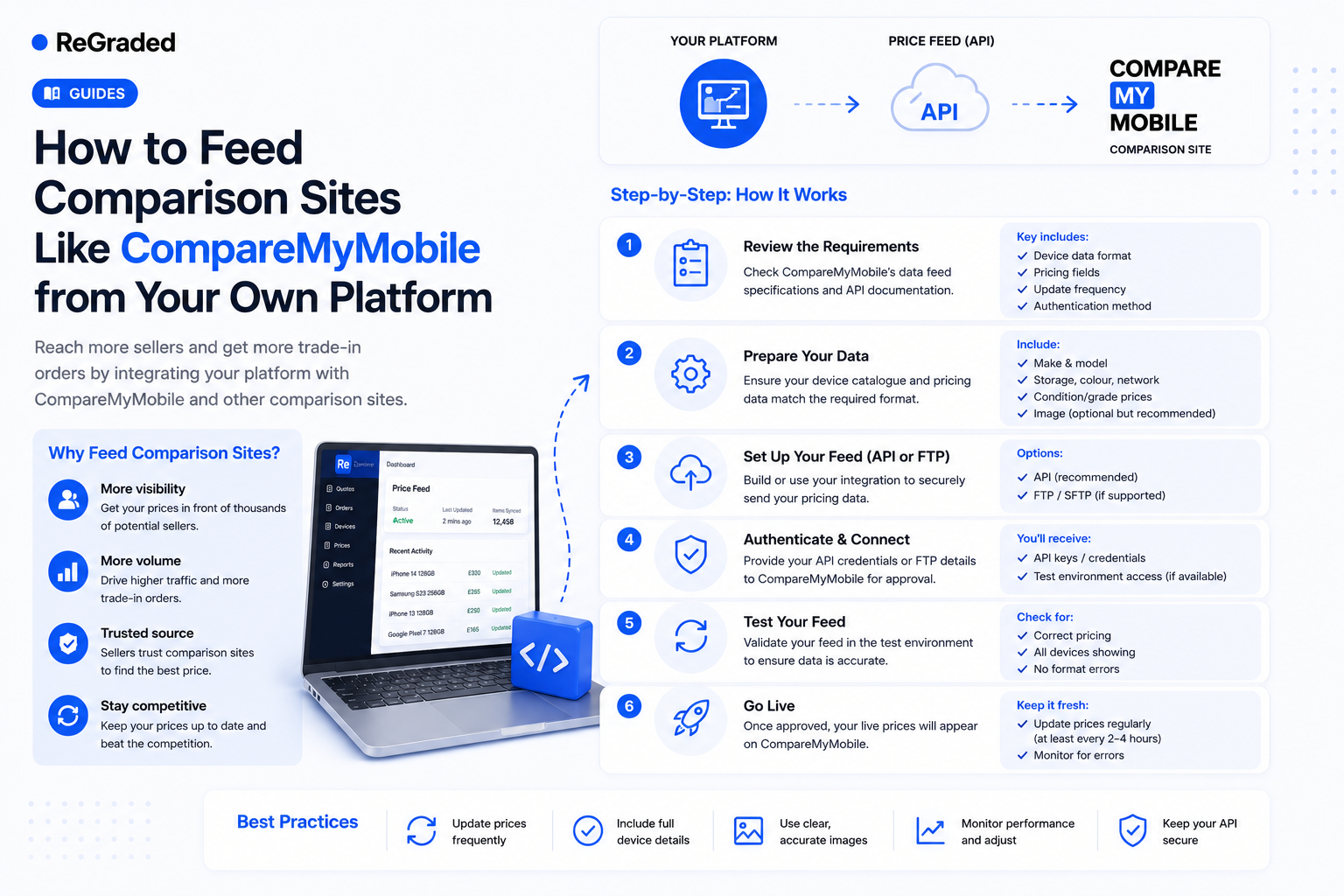
A properly integrated platform turns the relationship inside out. Instead of you logging into comparison sites, comparison sites log into you. The platform exposes a structured pricing feed — typically a CSV download or an API endpoint — that each comparison site consumes on a regular schedule. Update a price once, on your own platform, and every comparison site reflects it automatically within hours.
This is one of the genuine competitive moats native comparison site integrations create. The operators who do it well aren't faster or more disciplined; they've automated the part everyone else does by hand.
Inbound orders via postback
The same pattern applies in reverse. When a customer books a trade-in via CompareMyMobile, the comparison site sends an order postback to your platform. The order appears in your pipeline alongside postal bookings from your own website and walk-ins from your shops — same status model, same workflow, same dashboard. There's no separate "comparison orders" inbox to forget about.
From the customer's point of view, it's seamless: they got their quote on CompareMyMobile, got the postage label and confirmation from you, and never saw the handoff. From your side, it's just another booking — except this one came with no acquisition cost beyond your feed price difference.
Status sync going outbound
Comparison sites generally want updates pushed back to them as devices progress through your pipeline. When you mark a device as received, tested, or paid, the platform notifies the originating comparison site so they can update their own customer-facing status pages. Done by hand, this is forgettable. Done automatically, it improves the customer experience on a site you don't even own — which compounds back into your rating on that site.
Pricing control per feed
Here's where things get interesting commercially. Most operators want different pricing on comparison sites than on their own website. Sometimes higher (to win the comparison and lose some margin on a customer they wouldn't otherwise have reached), sometimes lower (to protect margins on traffic that's already coming to your own site). A serious platform lets you set per-feed pricing rules: match website prices, apply a percentage adjustment, or set completely independent comparison prices on a per-model basis.
This is the practical lever most operators don't realise they have. The same pricing principles that apply to your main pricing strategy apply doubly here, because every penny on a comparison site is competing in real-time against every other listing.
The pipeline view
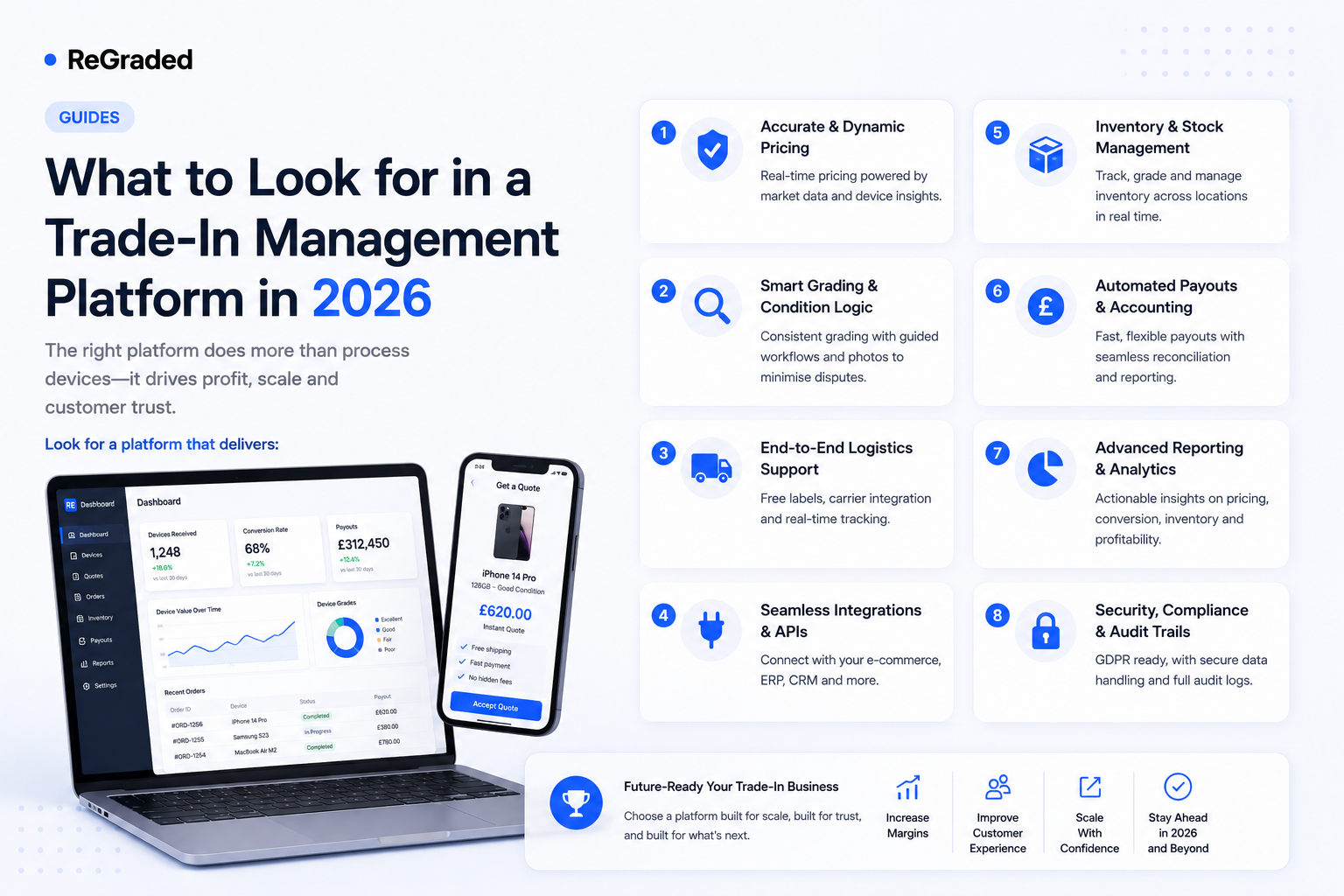
Once comparison orders land in your pipeline, they look identical to any other booking. The same status flow, the same testing checklist, the same payment process, the same audit trail. The source field shows where the order came from — useful for reporting, irrelevant to the day-to-day work. Trade-in management built this way means there's no "comparison site team" to staff separately; your existing pipeline just processes more devices.
Getting live on comparison sites
The barrier to entry for comparison sites used to be technical — you needed someone to build the feed format, the order postback, and the status sync from scratch. With a platform that has these built in, that work has already been done. You sign up with the comparison site, give them the feed URL the platform provides, and within 48 hours you're live alongside every major established operator.
The platform takes care of the protocol; you take care of the prices. That's the real shift. If you want to see how comparison site feeds work in practice, we'll walk you through a live feed and an inbound order. Pricing includes comparison site feeds at every tier — they're not a premium add-on, because if you're not on comparison sites in 2026, you're not really in the market.