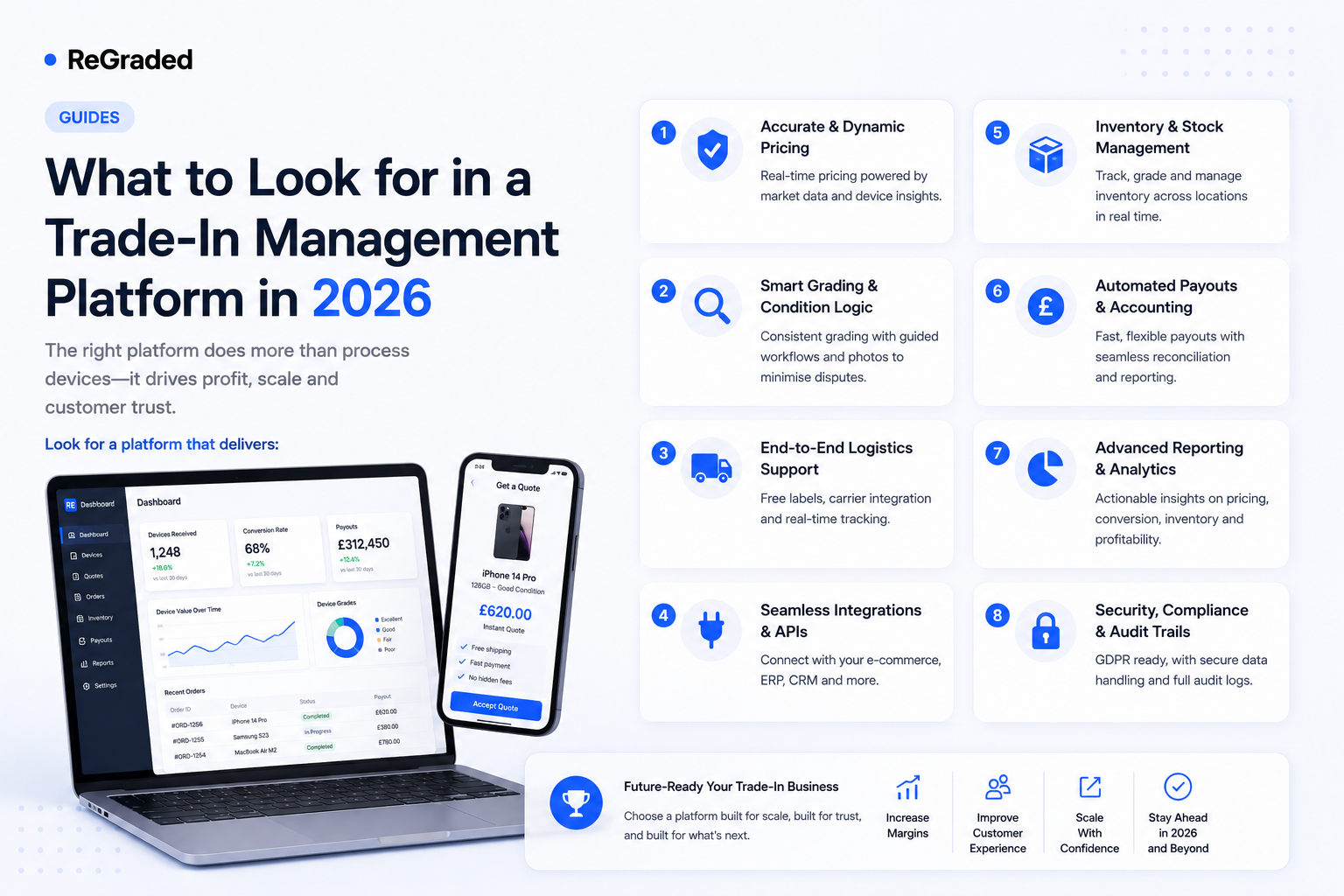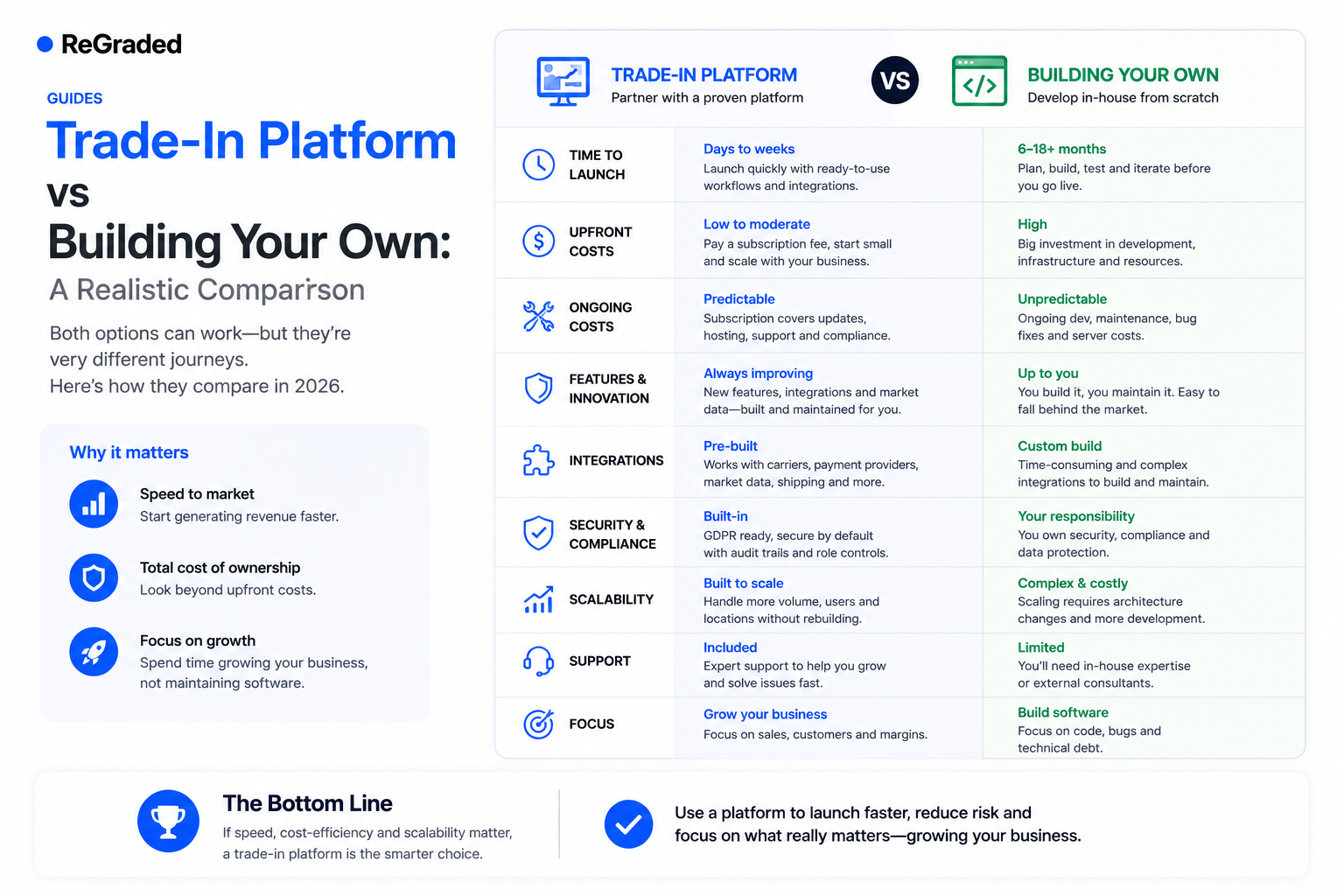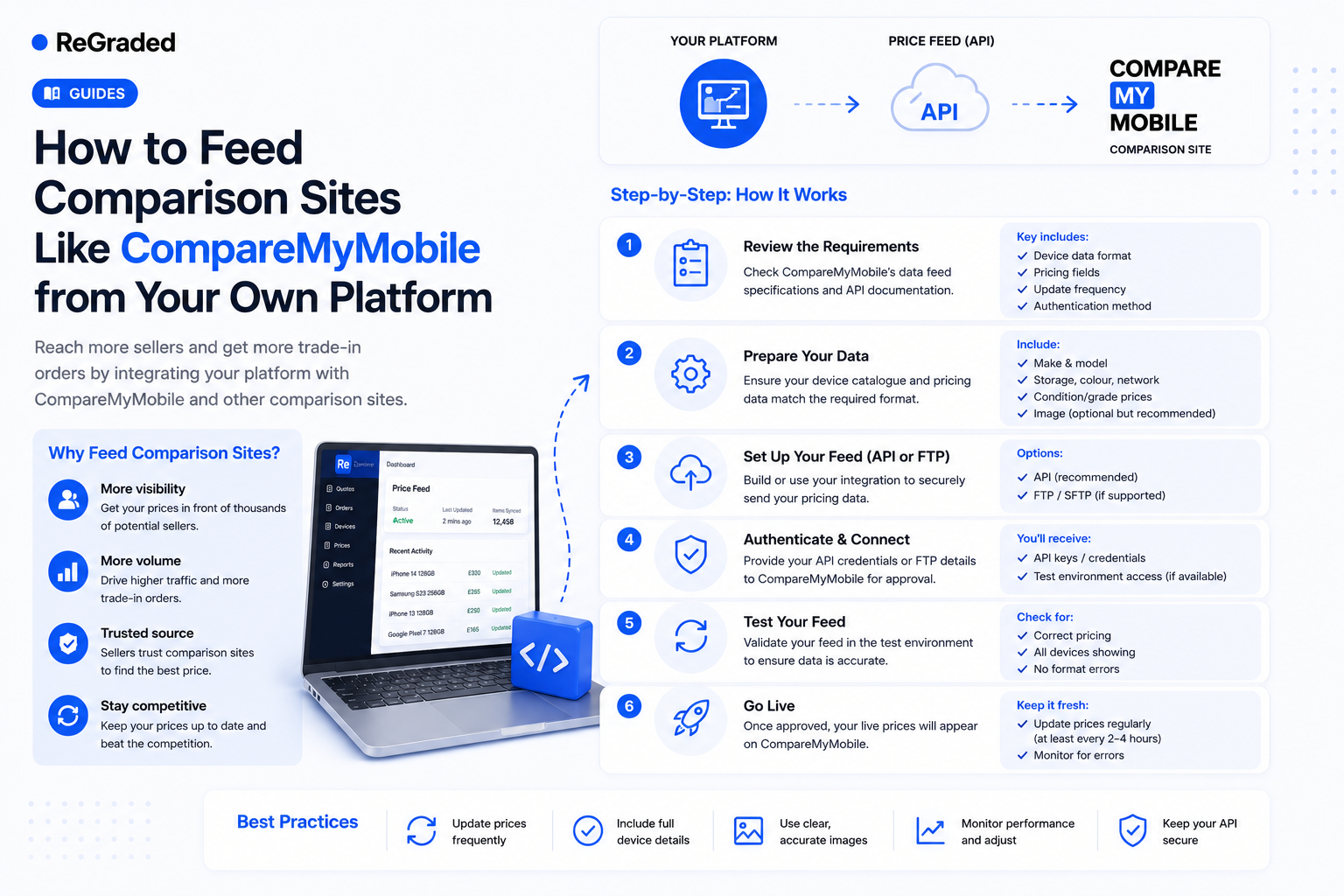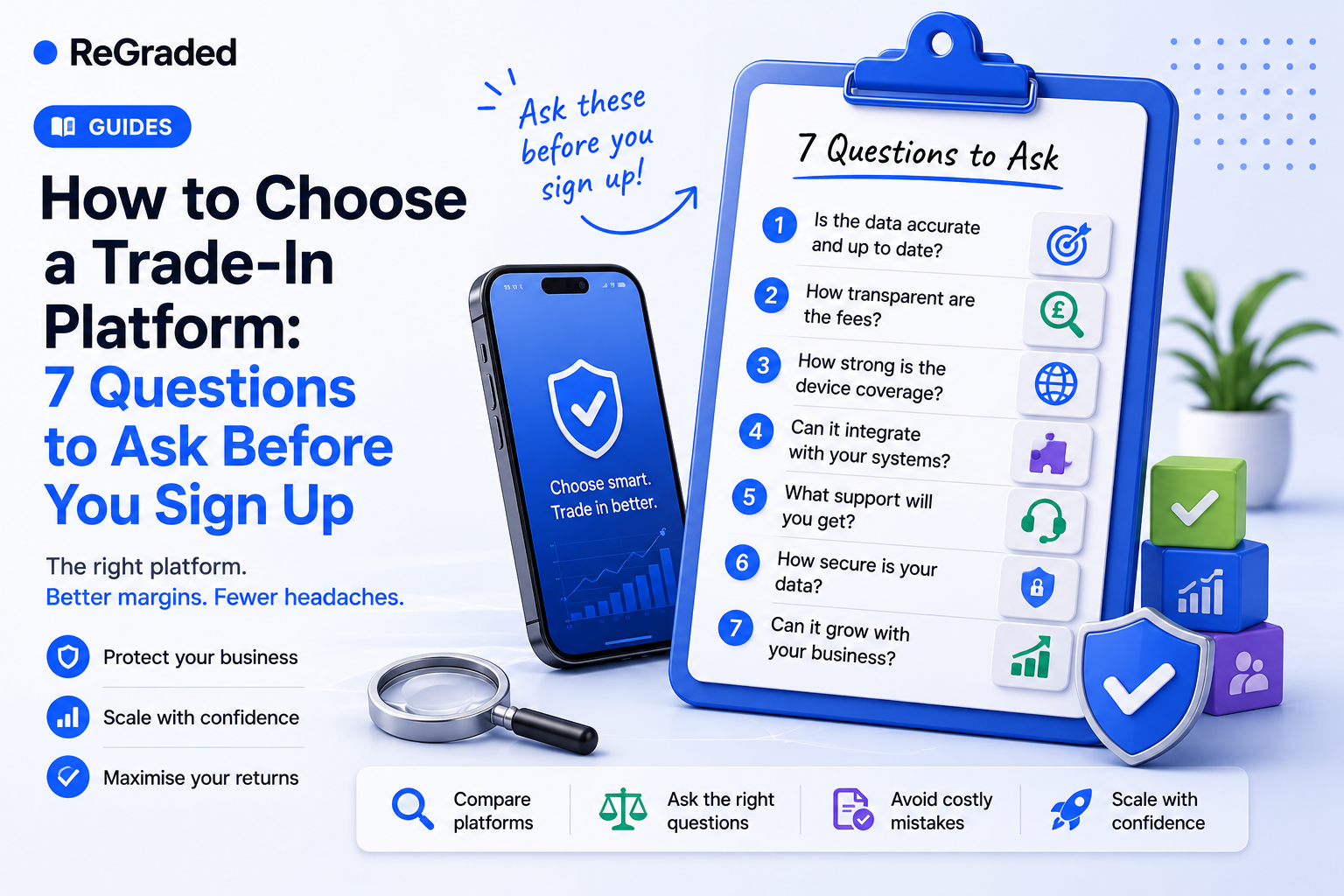
Choosing a trade-in platform is one of those decisions that's cheap to get right and expensive to get wrong. Pick well and you're live in days with a system that grows with you. Pick badly and you've sunk months and thousands of pounds into something that fights you — or worse, owns your customers. Before you sign up to anything, here are the seven questions that separate a platform you'll thank yourself for from one you'll be migrating away from in a year.
1. Is it my brand, or yours?
There's a world of difference between a white-label platform and a marketplace. On a marketplace, customers see the platform's brand and you're one seller among many. With white-label, customers see your brand — your name, your domain, your look — and the technology is invisible behind it. For a business trying to build its own reputation and repeat custom, that distinction is everything. You want customers loyal to you, not to someone else's logo.
2. What happens to my customer data?
Your customer list is one of your most valuable assets, so ask precisely how it's handled. Is your data properly isolated from other businesses on the same platform? Who legally owns it — you or the provider? Can you export it whenever you want? A platform built on strict multi-tenant isolation, where your records are unambiguously yours, is non-negotiable. Vague answers here are a red flag.
3. Can I set my own prices?
Some platforms dictate the prices you pay customers, or take a cut of every transaction. That's a quiet way of handing over control of your margin — the one number your whole business depends on. You should be able to set and adjust your own condition-based pricing freely, across every model and variant, without asking permission or surrendering a slice of each deal.
4. What's the real total cost?
The headline price is rarely the whole story. Dig for the rest: is there a monthly fee and a transaction fee? A setup charge? Payment-processing costs layered on top? Charges per location or per user? A platform that's cheap on the surface can be expensive in practice once the add-ons stack up. Insist on the all-in number. The clearest providers quote one price with every feature included — from £99/month, for example — rather than a low headline that grows once you're committed.
5. How long until I'm live?
Time is money, and a long setup is a hidden cost. A bespoke build takes months; a good platform should have you configured and trading within days. Ask for a realistic timeline to going live, and be wary of anything measured in quarters. Every week you're not live is a week you're not buying devices.
6. Can it handle walk-ins and online?
Plenty of platforms do one channel well and the other not at all. If you have a shop as well as a website — or might in future — you need both counter buying and postal trade-ins running through the same pipeline, priced and graded the same way. Forcing two channels through two systems is how you end up doing everything twice. Check this even if you only need one channel today; you may not tomorrow.
7. What happens if I want to leave?
Always ask the exit question before you join. Can you export your data in a usable form? Is there a long contract or a punitive notice period? Are you locked in by design, or free to go if it isn't working? A confident provider makes leaving straightforward, because they expect to keep you on merit rather than by trapping you. Lock-in is a sign of a platform that competes on handcuffs instead of quality.
Ask before you commit
Run any platform you're considering through all seven questions and the picture clarifies quickly. The strongest options give the same answers: your brand, your data, your prices, one honest price, live in days, every channel, and freedom to leave. ReGraded was built to answer yes across the board — the full feature set on every plan, your branding throughout, and no per-transaction cut of your margin.
A bonus question: who's behind it?
Beyond the seven, one thing is worth checking: who builds and supports the platform, and do they understand trade-ins specifically? A generic e-commerce tool bent into shape for buybacks will always have awkward edges, because it was never designed for revaluations, grading, or staged payouts. A platform built by people who've actually run trade-in operations tends to get the unglamorous details right — the return-fee flow, the failed-payment recovery, the audit trail on every device — because they've felt the pain of working without them.
The bottom line
The right platform doesn't just avoid problems — it pays for itself, usually within the first month, by replacing manual admin and letting you buy more devices with less effort. The wrong one costs you far more than its monthly fee in lost time and lost control. Ask the seven questions, demand clear answers, and choose the platform that's still the right call a year from now, not just on signup day.