For years, professional trade-ins belonged to the big names. If you wanted to sell your old phone, you went to CeX, posted it to Mazuma, or used musicMagpie — companies with slick websites, instant quotes, and the technology to make the whole thing feel effortless. The independent shop down the road might buy your phone too, but it meant a conversation, a handwritten note, and a wad of cash from the till. That gap is closing fast, and independent retailers are the ones closing it.
The opportunity hiding in plain sight
Customers want to trade in locally. They'd often rather hand a device to a real person in a real shop than post it to a faceless website and hope. The problem has never been demand — it's been that most independent shops can't offer the experience customers now expect: an instant online quote, a branded booking, tracked postage, and a fast, documented payout. The shops that can offer that experience capture trade that used to default to the chains.
What you're really up against
The established players don't win on price — independents often pay more. They win on professionalism. A customer lands on a polished site, gets a clear quote, and trusts the process because it looks like a proper operation. Set against that, a shop running on a counter conversation and a spreadsheet looks like a hobby, however good the actual service is. The deck has been stacked not by better buying, but by better systems.
What's changed
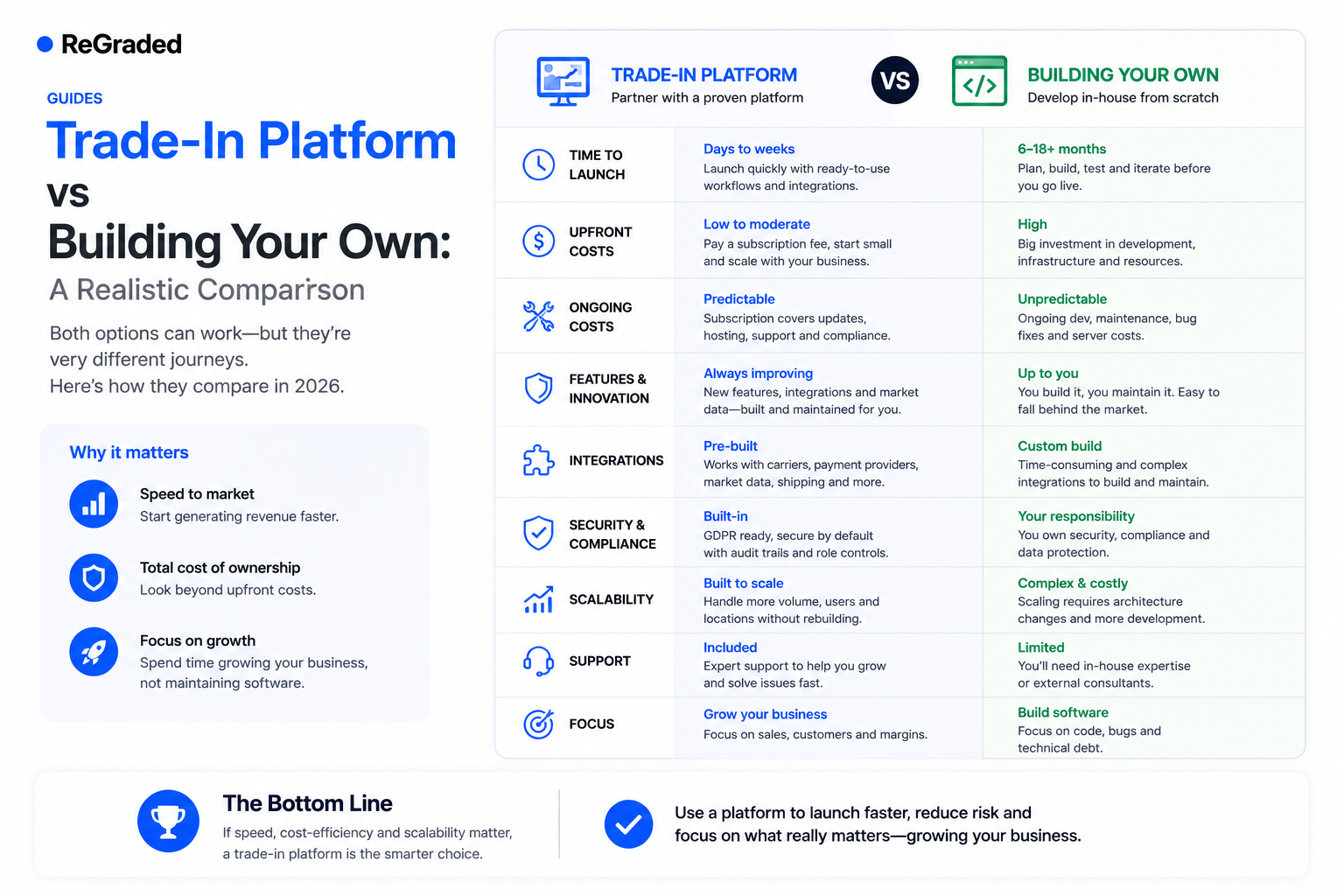
The thing that's shifted is access to technology. Building the kind of platform the chains use once meant a development budget most independents could never justify — tens of thousands of pounds and months of waiting. Software-as-a-service has flipped that. The same capabilities — branded website, instant pricing, booking, logistics, payments — are now available as a subscription, configured in days rather than commissioned over quarters.
What it looks like in practice
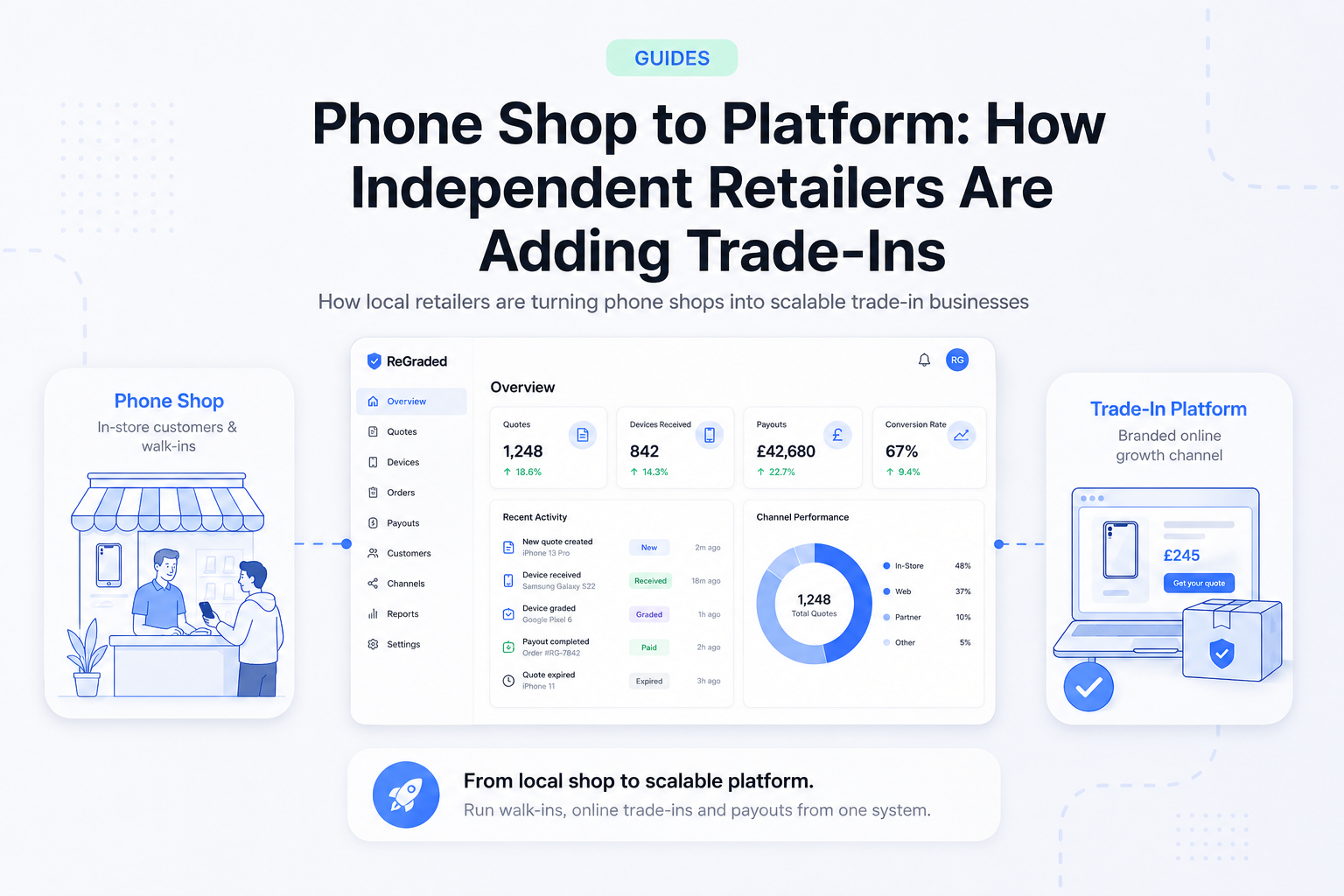
A phone repair shop adds trade-ins as a second revenue stream, buying devices from the same customers it already sees for screen repairs. A used-phone dealer who's spent years selling on eBay launches a branded website and starts buying directly, keeping the margin the marketplace used to take. A small chain unifies three shops onto one system so every branch quotes the same prices and feeds the same dashboard. None of them hired a developer. They configured a platform and went live.
The economics
The numbers work at modest volume. A healthy trade-in margin runs somewhere between £30 and £80 per device once you account for resale and the occasional failure. At fifty devices a month — well within reach for a shop with regular footfall — that's roughly £1,500 to £4,000 in gross margin. Against that, a platform from £99/month is a rounding error. The technology pays for itself many times over in the first month, and everything after that is upside. And unlike a marketplace that skims a percentage of every sale, a flat subscription means each extra device you process is margin you keep in full.
What you actually need to start
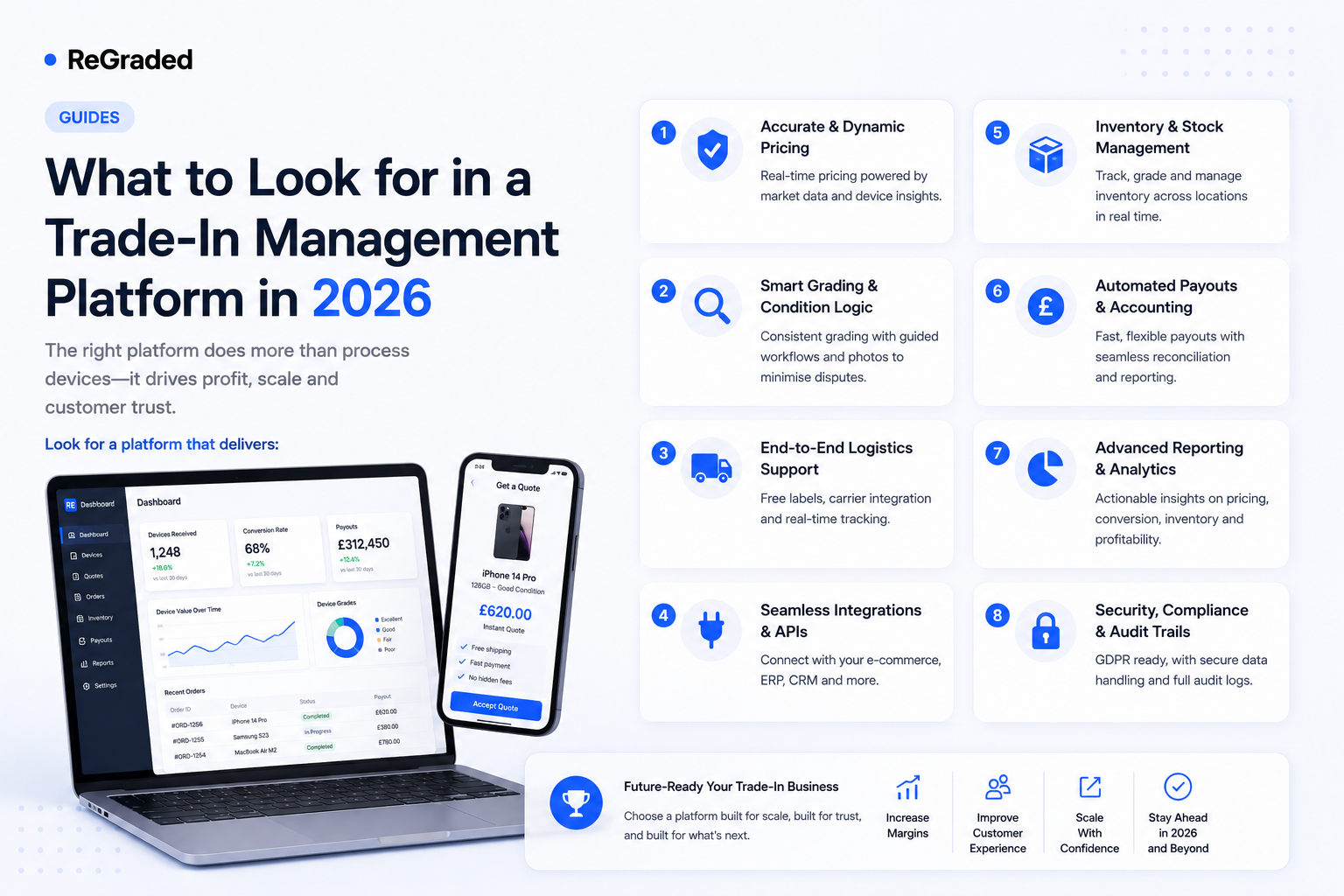
A platform — the branded website and back office that make you look and operate like the chains.
A pricing strategy — a condition-based grid you keep current, so you stay competitive without overpaying.
A route to resell — eBay, wholesale, or refurbishing and selling on yourself, depending on your appetite and skills.
That's genuinely the list. The hard part used to be the technology, and that part is now solved.
The professional advantage
The branded website does more than take bookings — it changes how customers see you. A proper trade-in experience signals that you're a legitimate operation worth trusting with a £400 phone, not just a bloke in a shop with a cash box. That perception is the whole game. ReGraded was built for exactly this kind of operator; the independent retailer setup gives you the same tools the national names use, under your own brand.
"But I'm not technical"
This is the worry that stops most independents, and it's largely unfounded. The point of a configured platform is that the hard engineering is already done — you set your logo, your prices, and your terms, not a single line of code, and there are no servers to manage or updates to install. If you can run a shop's till system or keep a pricing spreadsheet current, you can run a trade-in platform. Onboarding handles the initial setup; after that it's day-to-day operation, not maintenance.
The bottom line
You don't need to be CeX to run like CeX. The technology that once separated the chains from the independents is now available to anyone with a shop and the ambition to use it. The independents adding professional trade-ins aren't competing on being bigger — they're competing on being local and professional, which is a combination the chains can't easily beat.