"We'll just build our own." It might be the most expensive sentence in business. It sounds prudent — bespoke, owned, exactly what you need — but the gap between that sentence and a working platform is where budgets and timelines go to die. If you're weighing up a custom trade-in build, here's the honest breakdown before you commit.
What you'd actually have to build
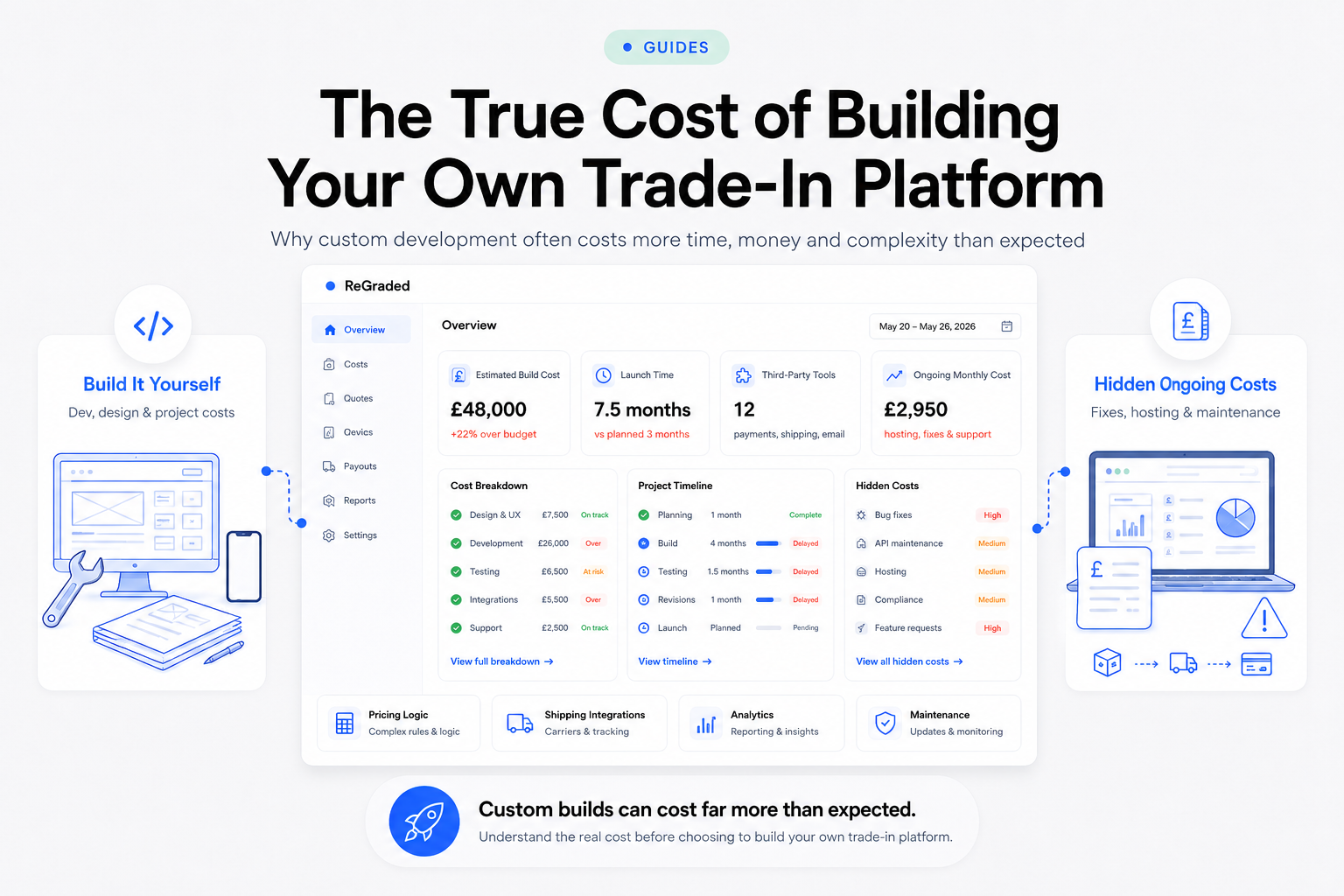
A trade-in platform isn't one job; it's a stack of them, and each line below is a real project in its own right:
Design: £3,000–6,000 for a brand, layout, and a set of page templates.
Development: £10,000–20,000 to turn those designs into a working site with a database and real pricing logic.
Payment integration: £2,000–4,000 to collect bank details, issue payouts, and handle failed payments.
Email system: £1,500–3,000 for branded, reliable messages at every stage a customer expects an update.
Shipping integration: £1,500–3,000 to generate postage labels and keep tracking in sync.
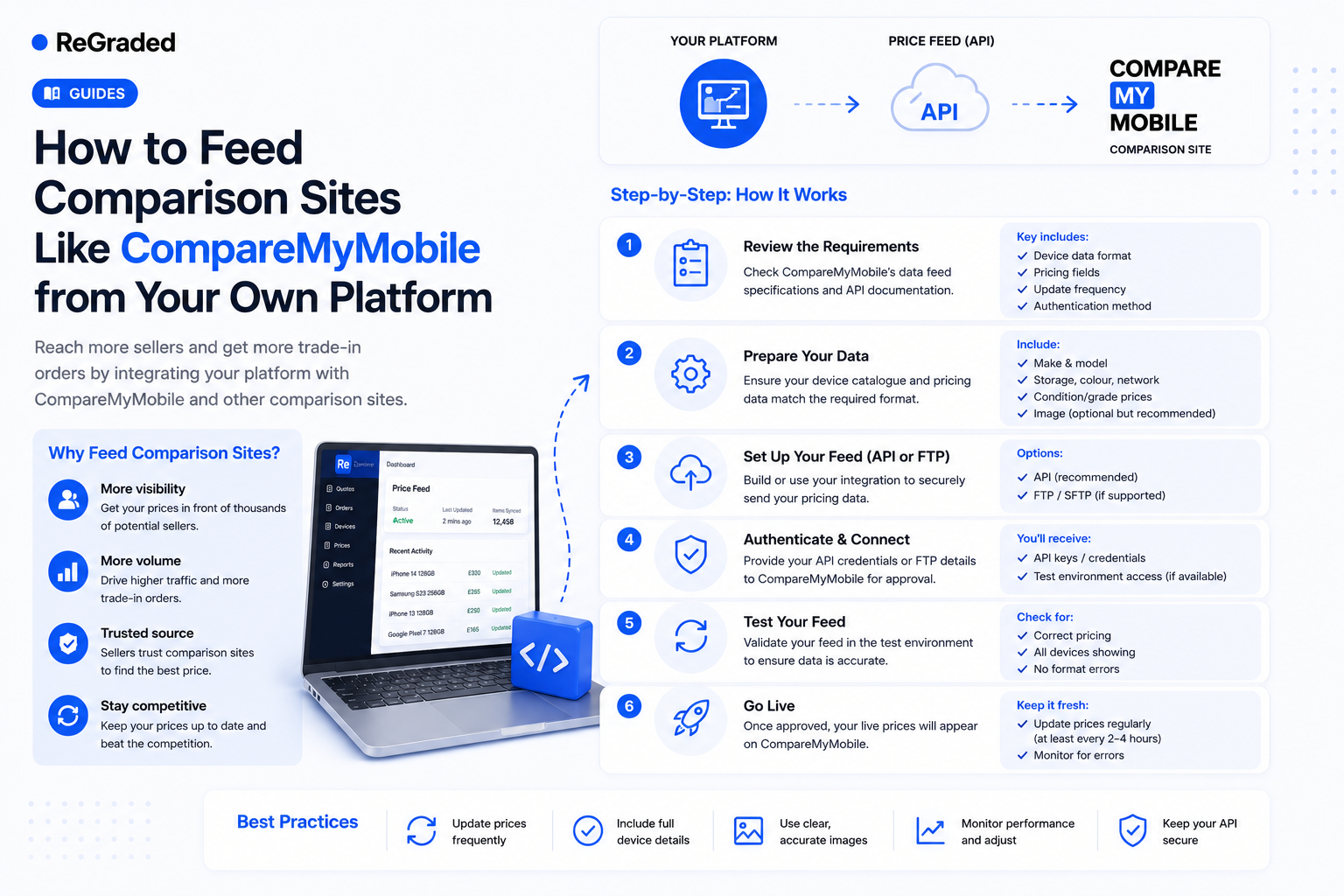
Comparison site API integrations: £2,000–4,000 to feed your prices to the aggregators that send buyers your way.
Maintenance: £1,000–2,000/month ongoing for security patches and dependency updates.
That's £25,000–45,000 for v1 — comfortably north of £25,000 before you've bought a single device, and a v1 is, by definition, the least capable the product will ever be.
What that figure still doesn't include
The build estimate is only the beginning. It rarely accounts for thorough mobile-responsive testing, the inevitable scope creep (there is always scope creep), or the work of getting from "demo works on the developer's machine" to "reliable in production". And none of it touches what happens after launch.
The costs that never stop
Software isn't a purchase, it's a tenancy. Once it's live you're carrying a developer retainer (realistically £1,000–£2,000 a month for someone who can fix things when they break), plus hosting, SSL, an email service, and payment-gateway fees. Security patches and library updates don't pause because you're busy. The bill for "owning" your platform arrives every single month, indefinitely.
The timeline
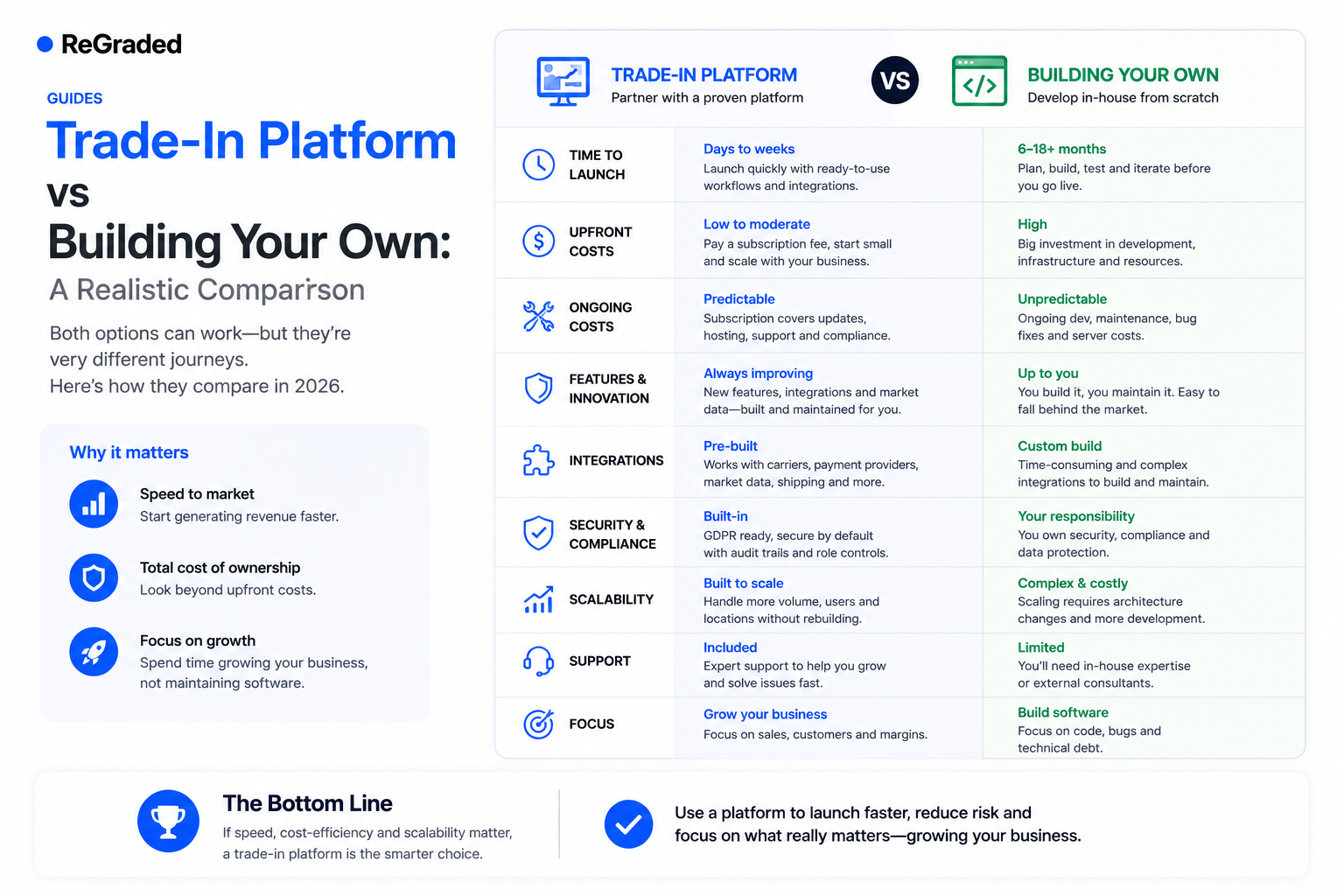
Plan for six to twelve months from kickoff to launch, assuming nothing slips — and something always slips. That's six to twelve months of spend with no revenue from the platform, while competitors who launched on day one are already buying devices and building a customer base.
The comparison that matters
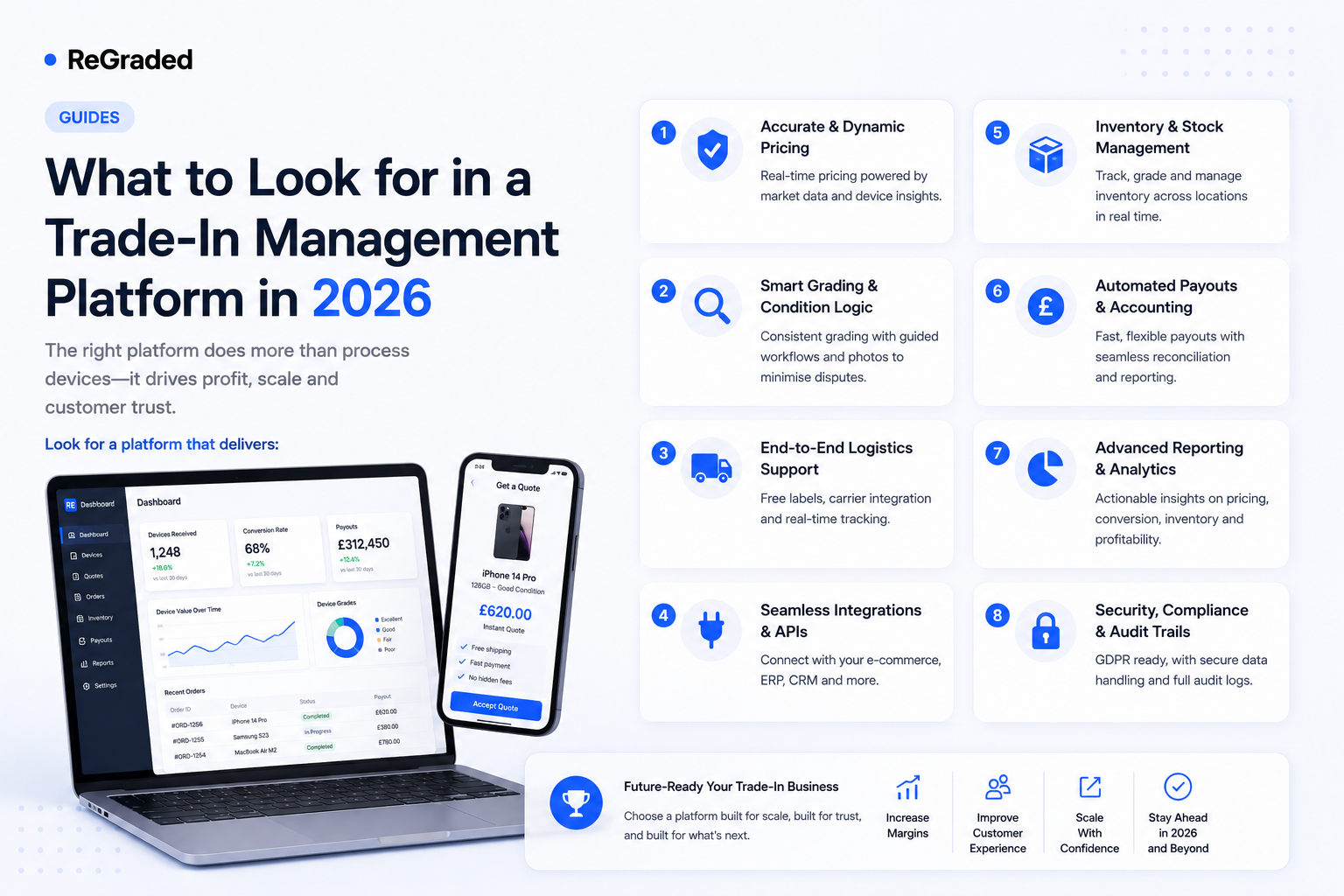
Set the two paths side by side. A custom build is roughly £25,000+ up front plus £1,000–2,000/month ongoing, live in a year if you're lucky. A purpose-built platform like ReGraded is from £99/month, all in — preview site in 48 hours, every feature included, maintained and updated for you. You can run the platform for the better part of a decade before you approach the cost of building v1, and you're earning from it the entire time. The full feature set is there from the first day.
So should you ever build?
Yes — if your requirements are genuinely unique, if your process is your competitive moat, and if you have the appetite to fund an ongoing engineering function. That describes a small minority of operators. For the other 95%, a platform that's already built, already tested, and already running is not the compromise — it's the smarter move. Build when building is the product. Otherwise, buy the boring infrastructure and spend your money where it actually differentiates you: stock, pricing, and customers.