If you're planning to launch a trade-in or buyback service, the first instinct is usually to call a web designer. It feels like the obvious move: you need a website, so you hire someone to build one. But that instinct quietly commits you to a path that costs far more — in money, time, and ongoing dependency — than most operators expect.
If you've been pricing up mobile phone trade in web design — or quotes for mobile phone trade in web development — you've probably already had a shock. That sticker price is exactly why so many operators stall before they ever launch. The good news is that you almost certainly need neither.
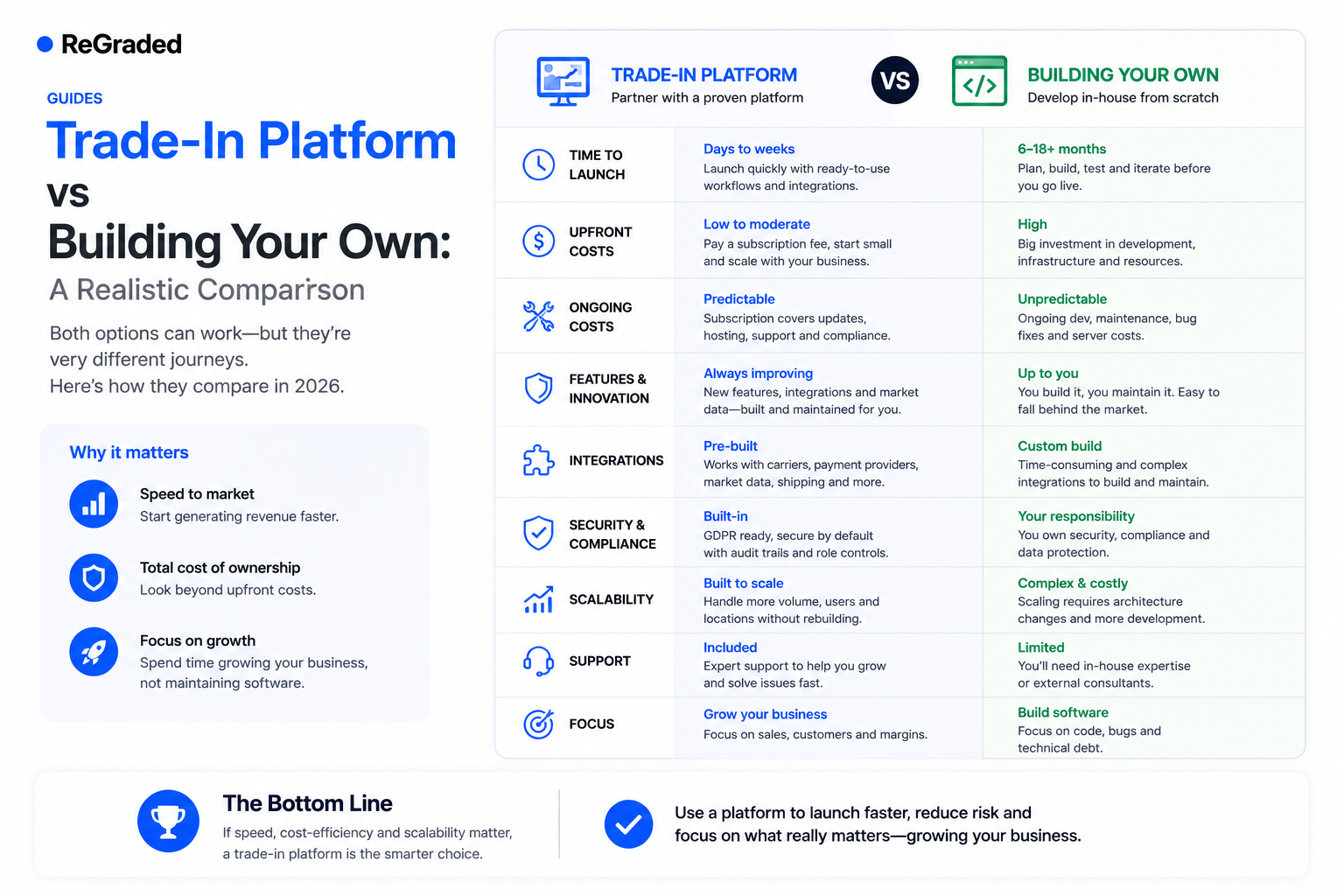
What a custom build actually costs
A trade-in website isn't a brochure site. It needs live pricing, a device catalogue, a booking flow that behaves like a checkout, and a secure way to collect customer and payment details. Once you price that properly, the numbers climb quickly:
Design: £3,000–6,000 for a brand, layout, and a set of page templates.
Development: £10,000–20,000 to turn those designs into a working site with a database and real pricing logic.
Payment integration: £2,000–4,000 to collect bank details, issue payouts, and handle failed payments.
Email system: £1,500–3,000 for branded, reliable messages at every stage a customer expects an update.
Shipping integration: £1,500–3,000 to generate postage labels and keep tracking in sync.
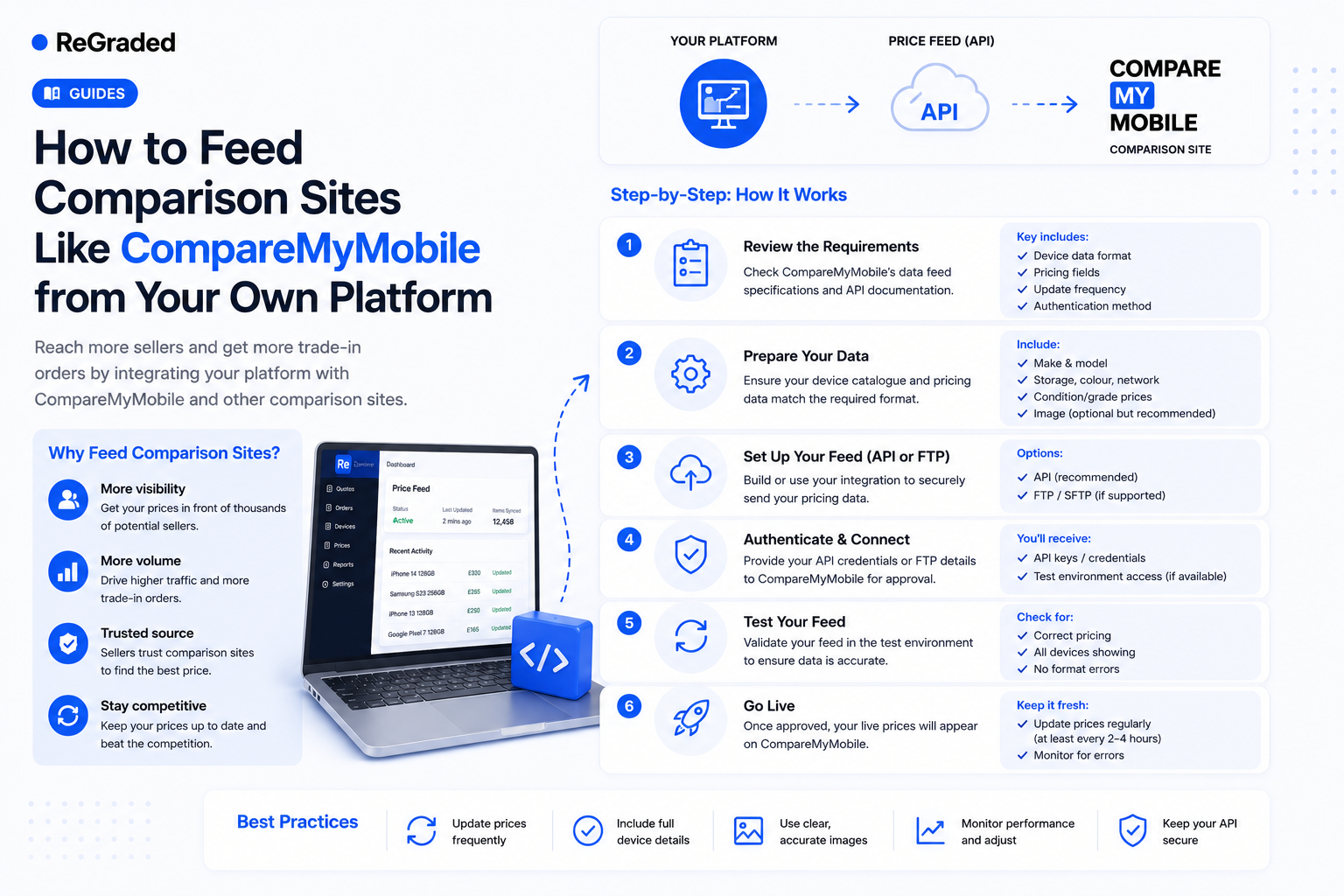
Comparison site API integrations: £2,000–4,000 to feed your prices to the aggregators that send buyers your way.
Maintenance: £1,000–2,000/month ongoing for security patches and dependency updates.
Add it up and a credible first version lands at £25,000–45,000 for v1 — comfortably north of £25,000 before a single device has been bought. And that's the optimistic figure, the one that assumes nothing goes wrong.
The timeline problem
Even when budget isn't the blocker, time usually is. A bespoke build typically runs three to six months from brief to launch. That's three to six months of meetings, revisions, and waiting — during which you're not buying a single phone.
Worse, the dependency doesn't end at launch. Every price change, every new device, every tweak to your terms becomes a ticket in someone else's queue. You don't own the thing you paid for so much as rent the attention of whoever built it.
You need an operations platform, not a website
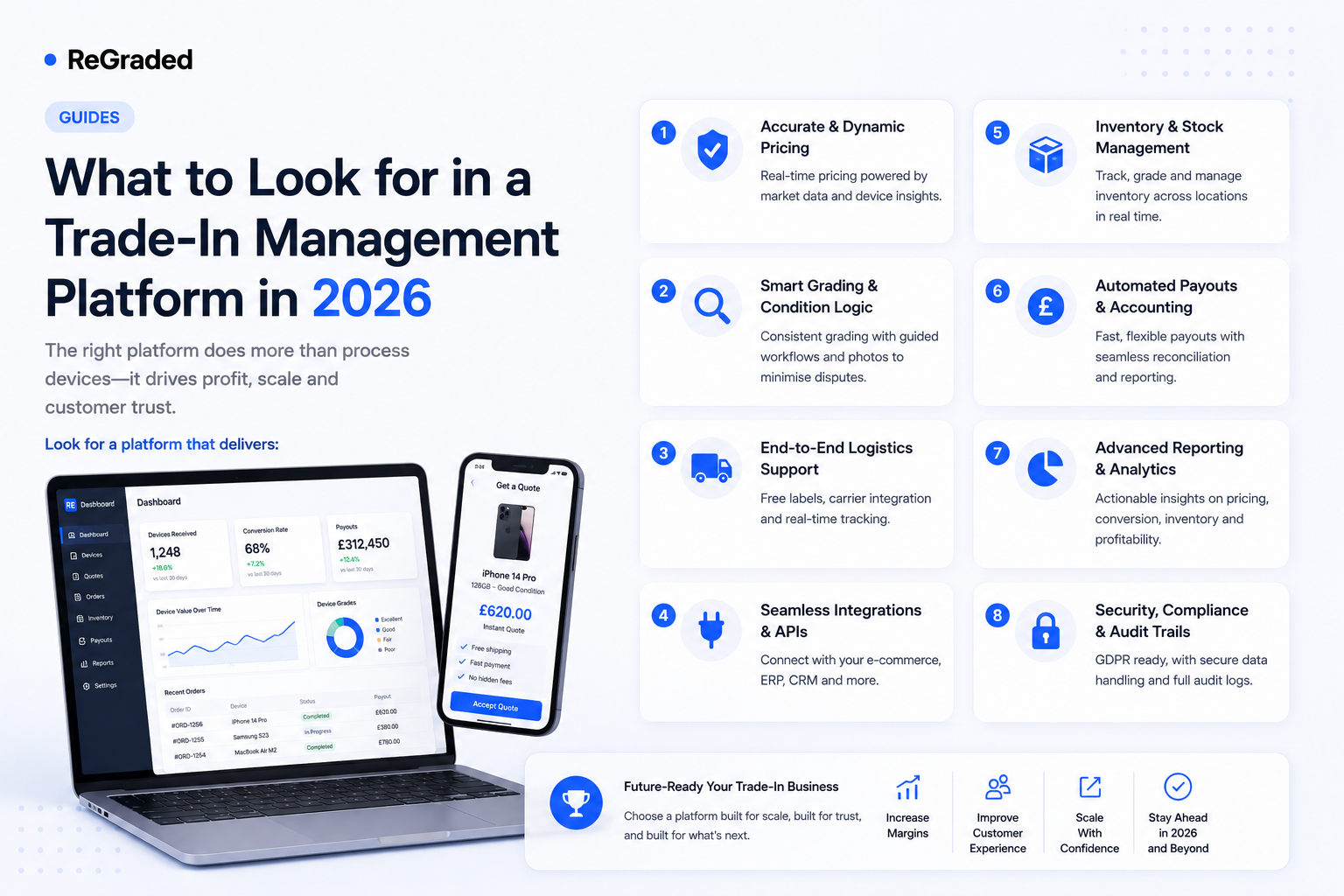
Here's the deeper issue. A web designer builds you a website — the shop window. What a trade-in business actually runs on is everything behind the glass: an admin dashboard to track every device, a way to test and grade them, payment batching, status tracking, and a clear audit trail.
That back office is where the real work happens, and it's the part a typical web project either ignores or massively underestimates. A beautiful front end with no operations layer behind it is how trade-in businesses end up back in a spreadsheet within a fortnight.
The faster alternative
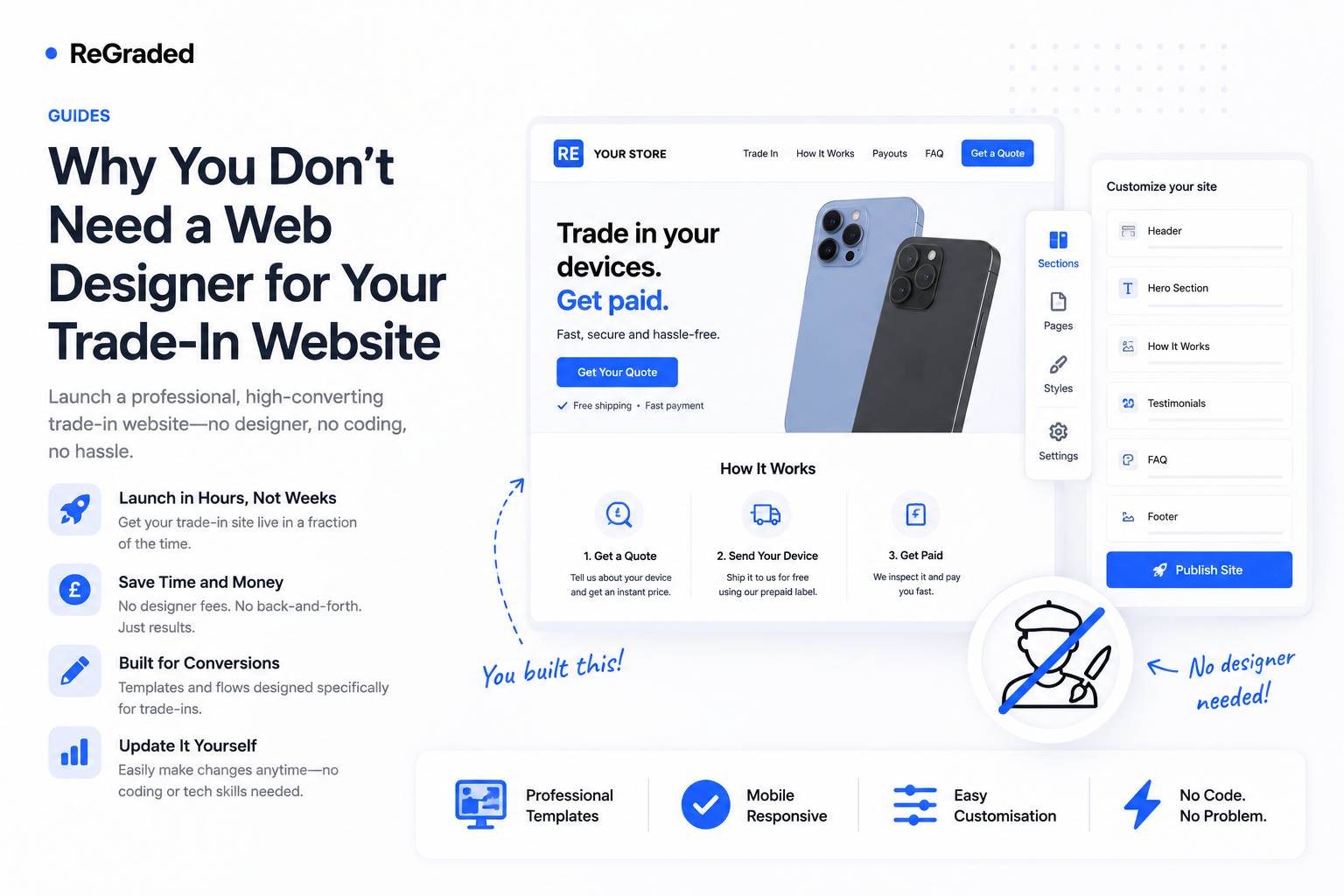
This is exactly the gap that purpose-built platforms close. Instead of commissioning a bespoke build, you configure a system that already does the job. With a platform like ReGraded, the branded website, admin dashboard, payment processing, shipping labels, customer accounts, and 28+ transactional emails all ship as standard — tested, maintained, and updated for you.
You bring the brand, the prices, and the devices. The platform brings everything else. Because it's built once and run for many operators, the economics are completely different: pricing starts at £99/month rather than five figures up front, and you're live in days, not quarters.
In other words, you can skip mobile phone trade in web design and mobile phone trade in web development altogether. A purpose-built trade-in website gives you the branded storefront and the operations behind it — without a single line of bespoke code or a developer on retainer.
The real question
None of this means web designers don't do excellent work — they do. It means a trade-in operation is a software product, not a website, and software products are rarely worth rebuilding from scratch when a proven one already exists.
So the question was never "who should design my website?" It's "why would I build one from scratch at all?" For the overwhelming majority of operators, the honest answer is that you shouldn't — you should launch, start buying devices, and put your money into stock and marketing instead.